
Soil First, Seeds Later: How Hydraulic Reversible Ploughs Are Powering India's Agricultural Renaissance
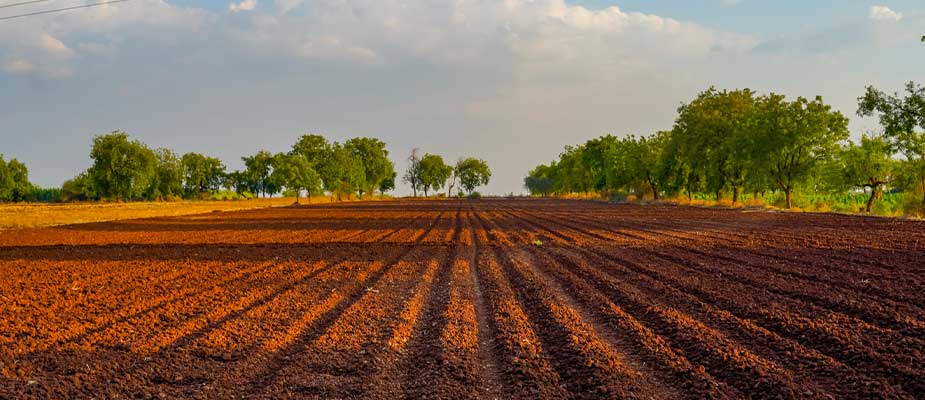
A Quiet Revolution Beneath the Soil
When India’s agriculture is discussed, and everyone’s talking about new seeds, high-tech fertilizers, drones, and the latest agri-tech apps, those are all thrilling, of course. But beneath all the commotion, there’s another shift occurring. One that doesn’t hit the headlines but makes all the difference.
It starts with the soil.
The fact is that no variety of seed, nor any irrigation system, can work miracles unless the soil is prepared to accept it. This is why specialists refer to soil preparation as the cornerstone of India’s agrarian renaissance. And spearheading this soil-first revolution is an implement that predates agriculture itself, reimagined for the modern era: the Hydraulic Reversible Plough (HRP).
Plough has always been the farmer’s best friend. But the Hydraulic Reversible Plough recycles that age-old concept and reworks it to suit the needs of the present day.
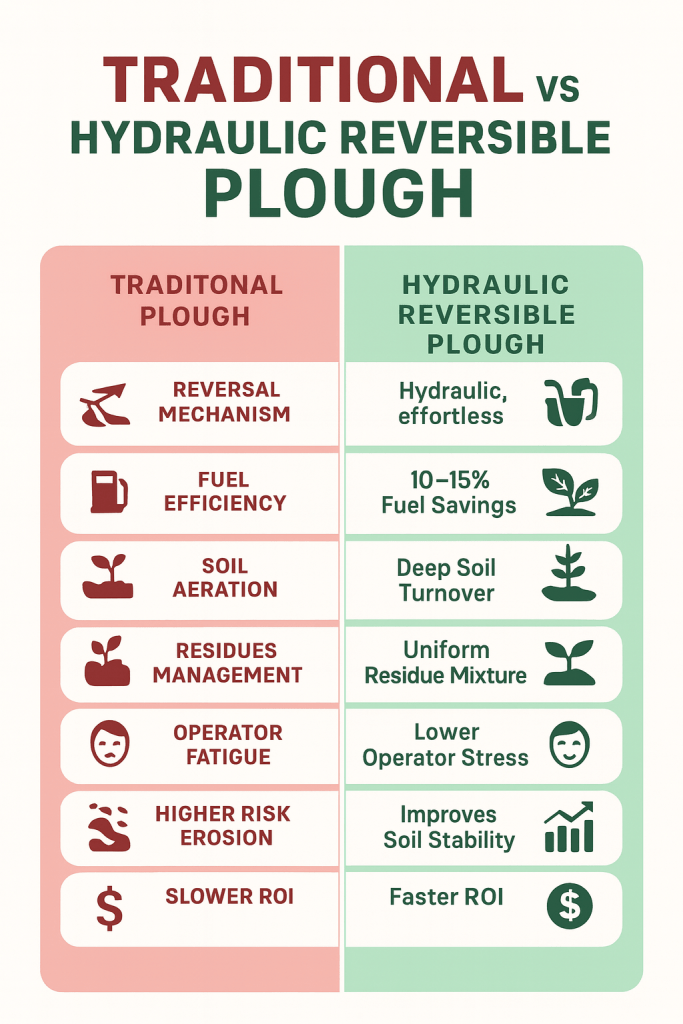
Rather than making a tractor swing in great circles at the end of a row, the HRP Hydraulic reversible plough swivels its blades hydraulically. One lever, one move, and the tractor continues moving forward. That means less lost time, reduced diesel consumption, and a labor rhythm that’s easier compared to the stop-and-turn of old-fashioned plows.
More significantly, the HRP does not merely scratch. It cuts sharply, till the soil uniformly, and deposits a field that is aerated, rich, and waiting for hardy crops.
How It Assists Farmers in Saving Fuel
For most farmers, diesel is one of the largest expenses. Every extraneous pass, every broad U-turn, every added hour of engine wear eats into already narrow margins.
Here is where the HRP leaves no doubt.
With hydraulic flipping, tractors move continuously. No turning, no sitting idly.
Since the plough flips soil evenly, there’s no double coverage of the same spot.
The closer cut breaks less resistance, which equates to the tractor not burning through fuel in exertion.
The outcome? Farmers attest to saving 10 to 15 percent on diesel per acre. And taking season after season into account, that savings isn’t minor, it’s revolutionary.
How It Nurtures Soil Health
Fuel conservation is instantaneous. Soil fertility is in the long term. The HRP does both unobtrusively.
By drawing oxygen into the soil, it builds root strength and enhances microbial action. By planting crop residues and stubble under the ground, it recycles organic matter into natural fertilizer. Alleviating compaction allows rainwater to percolate in rather than flow off. And by incorporating weeds into the soil, it reduces the farmer’s reliance on herbicides.
This is more important than ever. India presently has 147 million hectares of degraded farmland and loses more than 5 billion tonnes of fertile topsoil annually. Equipments such as the HRP are not farming luxuries! They are necessary for maintaining farm productivity and sustainability.
Looking to cut fuel costs and improve soil health? Explore Shakti Agrotech’s Hydraulic Reversible Ploughs today and see how they can transform your farming practice.
A Plough Fit for Today’s Crops
The agricultural renaissance is not about producing additional wheat or rice. It is about climate adaptation, diversification, and access to new markets. Indian government policies are nudging millets, pulses, and oilseeds, while cotton, soybean, and horticulture crop exports are growing.
All these crops require special soil conditions. HRPs are wide enough to accommodate all of them, shattering clods in Madhya Pradesh’s black cotton soil, preserving valuable water in Gujarat’s dry belts, or preparing a fine seedbed for vegetables in Uttar Pradesh.
Traditional vs Hydraulic Reversible Plough
For growers who are thinking about the bigger picture, profitability, sustainability, and resilience, the HRP is not an extra. It’s essential.
A Farmer's Voice
Ask Ramesh Patel, a soybean grower in Madhya Pradesh. For years, he used a disc plough, fighting clods, uneven germination, and fuel bills that kept escalating.
In his first year with a Shakti Agrotech HRP, his diesel consumption fell by 13 percent. Even more dramatically, his crop emerged in an even pattern, and he took home his highest harvest in five years.
“The difference wasn’t in the seed or the fertilizer,” says Ramesh. “It was in the manner in which I prepared my land.”
Dealers and the Bigger Market
Farmers aren’t the only ones noticing the difference. Dealers across Gujarat, Rajasthan, and Madhya Pradesh report steady demand, supported by state subsidies that make HRPs affordable. For them, Shakti’s ploughs are reliable products that bring farmers back season after season.
And not India alone. From Tanzania to Kenya, East African farmers working under soils and conditions not different from ours are taking up Hydraulic Reversible Ploughs. For Indian traders, this provides a whole new line of business: exports.
Precision Farming Starts Here
We picture precision farming as futuristic: tractors with GPS, drones overhead, sensors on the ground. But all of these technologies are useless unless the ground is level, fertile, and properly prepared.
In that way, the HRP is India’s first precision farming technology. It provides uniform furrows, saves water, and prepares the seedbed upon which everything else, irrigation and fertilization, is optimized.
Building the Future from the Ground Up
India’s agricultural renaissance will be celebrated for so many things. A few of these are climate-resilient crops, digital ingenuity, and world exports. But its true foundation will always be the earth.
With millions of hectares already lost, getting land preparation right is no longer a choice. The Hydraulic Reversible Plough of Shakti Agrotech addresses this requirement by delivering fuel efficiency, healthier soil, and future-proofing farm practice.
Join thousands of progressive farmers and trusted dealers who rely on Shakti Agrotech. Visit our product range and take the first step towards higher yields and smarter farming.
The future of farming could include drones overhead and apps on smartphones. But the revolution starts underground, with each turn of the plough.