
Hydraulic vs. Reversible Ploughs: Which is Best for Your Farm?
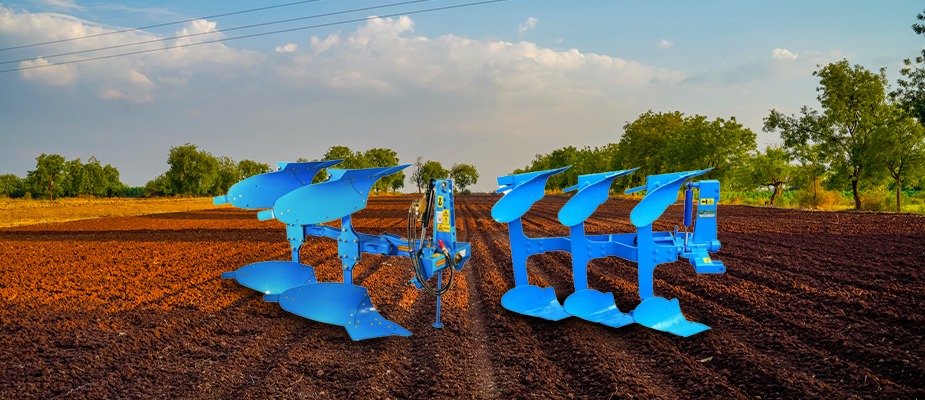
Farming has always relied upon a delicate balancing act of tradition and innovation. Although the fundamentals of agriculture remain in the soil from which crops are grown, the tools used to grow those crops have changed over time. One of the most basic tools in agriculture today, the plough, has certainly seen some major changes since the early days of agriculture and continues to be one of the fundamental tools of modern-day agriculture. Choosing the right type of plough for use in your farm has a significant effect on your ability to produce plentiful quantities of crops.
Today, many farmers face a very common problem: should they invest in a hydraulic plough or a reversible plough? Both types of plough are advanced forms of the tractor-operated plough, which were created to improve efficiency, reduce labour requirements and improve soil health. They have design, operation and applicability to farming operations capabilities that differ one type from the other.
In this comprehensive blog, we will outline the differences between the two types of ploughs, their respective advantages and disadvantages,
A tractor-operated plough is a piece of agricultural equipment that is used for soil cultivation by attaching it to a tractor. It allows you to break through compacted soil, cover up old crops, and improve the quality of the soil itself. Modern tractor-operated ploughs are built for greater productivity, consistency and scalability than traditional horse-drawn ploughs.
Benefits of using a tractor-operated plough:
- Preparation of the land faster
- Less manual labour is involved
- Soil will be more aerated
- Weed control will be better
As farms grow larger and manual labour costs increase, demand for efficient methods of ploughing has increased. Hydraulic and reversible ploughs have met the need for more efficient methods of ploughing.
Want to Upgrade Your Farming Efficiency?
Explore modern plough solutions that align with your tractor and soil needs today!
What is a Hydraulic Plough?
The use of hydraulic systems to regulate the movement, depth and angle of a hydraulic plough during operation has made controlling this type of implement much easier than other types of ploughs, especially on uneven or challenging terrain.
Some key features of a hydraulic plough for tractors include:
- Hydraulics to lift and lower the plough
- Adjust the depth of the ploughing operation
- Ability to operate smoothly without the need for manual labour
- Used in a variety of different soil types
The following are some advantages of using a hydraulic plough:
Ease of Use
The use of hydraulics makes operating the plough easier for the operator, as he can control the implement from the seat of the tractor with no need for manual adjustments.
Less Downtime
The speed of the adjustments allows for less downtime between passes.
Precision Farming
Hydraulic ploughs for tractors provide consistent depth and angle, which creates a uniform bed for planting and tillage.
Reduced Operator Fatigue
Minimal manual handling will help reduce the fatigue level of the operator.
The only disadvantages of using hydraulic ploughs are:
- Higher Cost to Start
- The Cost of Maintaining Hydraulic Components
- Slightly More Complex than Mechanical Ploughs
For the majority of farmers, hydraulic ploughs for tractors are very beneficial because they allow them to manage a larger area and can also be used on a number of different soil types.
Looking for Advanced Tools that Simplify Your Workload?
Discover the latest hydraulic plough options amongst the finest plough suppliers in Gujarat, tailored for modern farms!
What is a Reversible Plough?
A reversible plough helps turn the earth in the desired direction while reversing directions to provide an opposite turning of the soil. Circular patterns of ploughing can be eliminated with the use of a reversible plough because the ploughing actions are completed in one motion, creating uniformly turned soil.
Some Key Features of Reversible Ploughs:
- Two drawings of mouldboards are on both sides
- The ability to change the direction of the plough at the end of each run
- Even soil inversions
- Fewer ridges and furrows are being formed
Some Advantages of Reversible Ploughs:
Even Soil Preparation
Allows for well-distributed turnover to achieve uniformity across the fields
Increased Field Efficiency
Unnecessary tractor movements remove time that would be taken to make an application to turn the field over
Increased Moisture Retention
Don’t leave spaces between the furrows, allowing for more moisture to enter the soil
Better Yield for Crops
Providing uniform amounts of soil conditions for planting creates favourable conditions for germination.
Some Disadvantages of Using Reversible Ploughs
- Requires more skill to operate
- Heavier than regular ploughs
- Not suitable for smaller-sized farms
Reversible ploughs are widely used for precision farming, large-scale operations within agriculture. Therefore, creating a high-volume demand for a reversible plough supplier in India.
Want Perfectly Levelled Fields & Improved Yields?
Consider switching to a reversible plough for superior soil management!
Hydraulic vs. Reversible Ploughs: A Detailed Comparison
The decision of which to use will rely on factors specific to your farm, i.e. farm size, soil type and operational requirements. For example:
- Ease of Use: A hydraulic plough is much easier to operate because it is fully automated, compared to a reversible plough, which requires more operator skill but can achieve better results than a hydraulic plough.
- Efficiency: Hydraulic ploughs are much faster to set up and adjust, and are perfect for working on varied terrain, whereas reversible ploughs are very efficient when working on the same pattern of ploughing
- Impact on Soil Quality: Hydraulic Plough creates good mixing of soils, and a reversible plough can create superior inversion and levelling in the soil.
- Cost: Hydraulic ploughs cost significantly more in the initial purchase than a reversible plough; however, the cost of a reversible plough may be lower depending on your size and how many ploughs you need.
- Maintenance: A hydraulic plough for tractors will require hydraulic system maintenance, while a reversible plough requires mechanical maintenance.
Still Unsure Which Plough Suits Your Farm?
Compare features and consult expert plough suppliers in Gujarat to make the smartest investment!
Why Choosing the Right Plough Supplier Matters
- Farm Size: Large farms can increase their efficiency with a reversible plough. Small farms may use a hydraulic plough because it is easier to use.
- Soil Types: Hard, rocky or uneven soils will benefit from the use of hydraulic ploughs. Conversely, soils that are smooth and/or uniform should be considered for reversible ploughs.
- Tractors: Be sure that the tractor you own will be compatible with the plough you want.
- Budget: Be sure to include all costs when evaluating a plough. How much will it cost for the initial purchase and then ongoing maintenance for that same piece of equipment?
- Experience Level: If you have never used one, you may want to consider a hydraulic plough for tractors because they are often easier to use than their more advanced counterparts.
Partner with a Trusted Plough Supplier Today & Ensure Long-Lasting Performance for Your Farming Equipment!
Final Verdict: The Right Choice
There is no definitive answer for which kind of plough is best. This will ultimately depend on your preferences. If you want a plough with movement that is easy to operate, then a hydraulic tractor-operated plough is going to be your best fit.
If you want a plough for soil that can be made uniform easily and quickly, and also for preparing many acres of soil (like a large farm), then you should go with a reversible type plough. Both of these will be considered quality products of a tractor-operated plough system, but the key to getting your money’s worth from either option will depend on your needs as a farm operator; therefore, budget and plans.
The farming industry is changing rapidly because of technological advancements that enable farmers to access high-quality equipment like ploughs. The same can be said about either type of plough purchased; they will improve both the quality and quantity of your farming by making use of modern equipment, and will fulfil the expectations regarding profits and productivity.
Using the information above to determine what you need, along with the knowledge of reliable plough suppliers in Gujarat who sell hydraulic or reversible ploughs, you can maximise the return on your investment by selecting either today and reaping the rewards tomorrow.